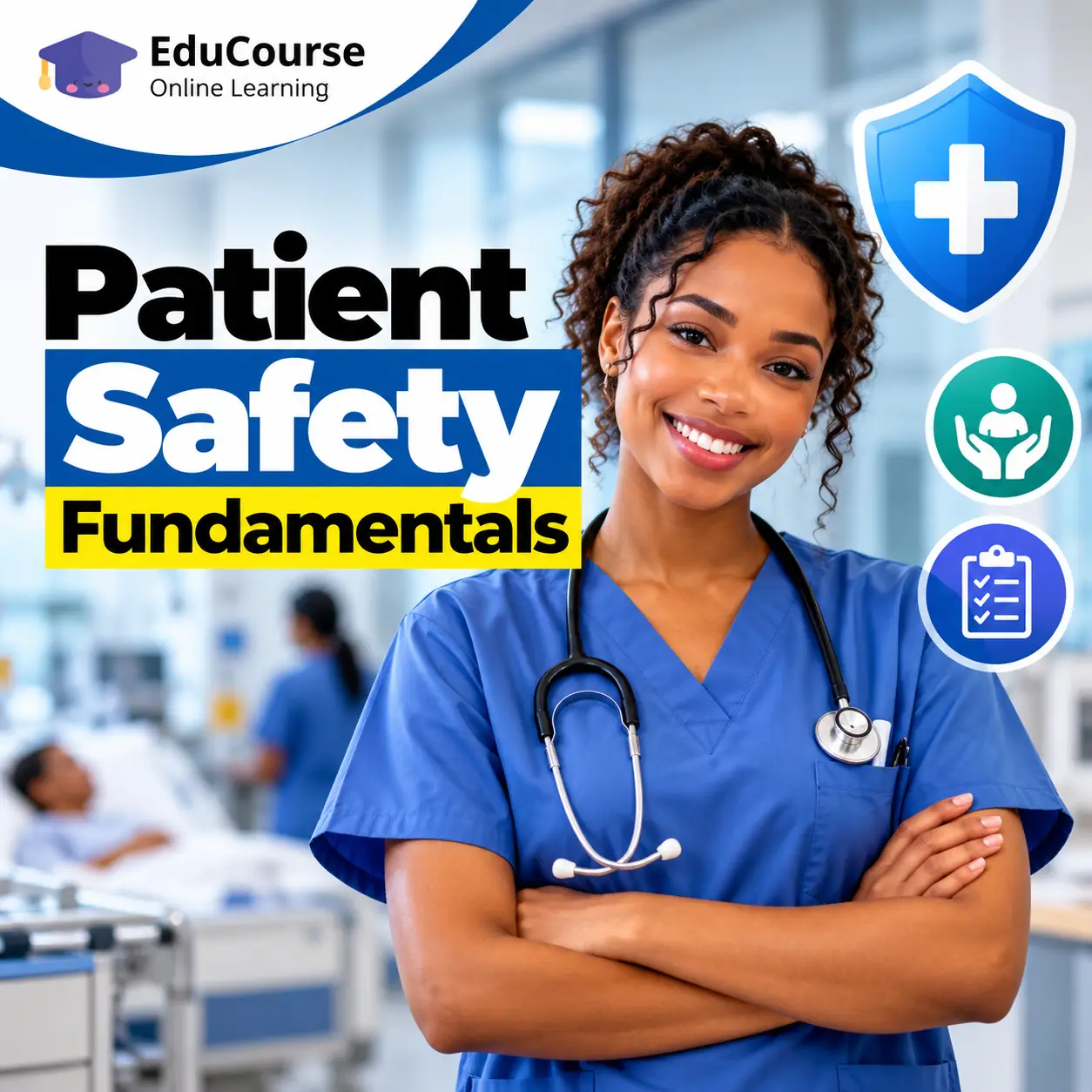
Study a Free Patient Safety Fundamentals Course with Certificate in South Africa with Durban City Academy. Learn what patient safety means in everyday care, how.
10 lessons with topics and quizzes.
The Free Patient Safety Fundamentals Course with Certificate in South Africa is an online beginner course for people who support patients in care settings. You will study practical ways to recognise risks, prevent avoidable harm, communicate clearly and report concerns, with a certificate available after completing the course.
It is suitable for aspiring and current caregivers, support workers and other learners who want to understand their part in safer care. You will explore patient rights, infection prevention, medication support, falls, emergencies and incident reporting.
Patient safety means taking thoughtful steps to reduce risks during everyday care. Beginners can use this course to build a clear foundation before applying their learning within their role, care plan and workplace procedures.
Care happens in many settings, from a person’s home to a community or residential facility. Small actions—such as listening carefully, keeping a route clear or sharing a change in someone’s condition—can help a care team notice and respond to concerns.
For South African learners, online study offers a flexible way to explore these essentials alongside other responsibilities. The course focuses on general safety awareness; it does not replace workplace training, local procedures or instructions from qualified professionals.
You will also consider how respect and safety work together. Seeking consent, protecting privacy and involving a person in decisions are part of providing considerate support—not separate from preventing harm.
Lessons introduce practical topics including hand hygiene, safe handover, noticing fall risks and raising concerns about unexpected medication. You will learn to stay within your responsibilities and seek guidance when a situation needs someone else’s expertise.
The course also covers what to do when a person’s condition changes or there is immediate danger: call for help, follow local emergency procedures and offer calm support while assistance arrives.
Reporting is another important learning area. You will explore how near misses and incidents can be recorded factually through approved processes, helping teams identify patterns and learn from events.
After finishing, you can use the certificate as a record of your course completion and continue building your knowledge with related learning guides. For more options, browse online courses at Durban City Academy.
Patient safety is relevant wherever people receive care. A missed detail during handover, an unreported near miss or an unnoticed hazard can affect a person’s wellbeing. Learning to pay attention, communicate and escalate concerns gives you a more considered way to contribute.
A beginner patient safety course can also help you understand how everyday responsibilities fit into a wider team effort. Rather than relying on memory alone, you will explore practical routines and the importance of following through when you raise a concern.
For a broader overview, see the principles of patient safety for healthcare workers. The guide complements this course by explaining the ideas behind safer everyday practice.
Explore what safety means in daily care, how preventable harm can occur and how each team member can contribute.
Learn why respectful, person-centred support includes seeking consent and protecting dignity, privacy and confidentiality.
Practise sharing relevant information, listening to patients and families, and checking that important details have been understood.
Consider care-related and environmental risks, notice changes and raise concerns through the right channels.
Review hand hygiene, appropriate protective equipment and keeping shared spaces and care items clean. For more detail, explore this guide to infection prevention and control in healthcare settings.
Understand the importance of role limits, authorised instructions and local procedures. Learn to raise concerns about missed, delayed or unexpected medication rather than making assumptions.
Look for individual factors that may increase fall risk, keep walking routes clear and support movement in line with the care plan.
Learn to recognise urgent changes, call for help, follow local emergency procedures and stay calm while assistance is on its way.
Explore what to report—including near misses—and why factual records through approved processes support learning.
Use routines and checklists thoughtfully, speak up and reflect on practice without losing sight of individual needs.
10 lessons with topics and quizzes covered in this course.
Patient Safety Fundamentals is designed for beginners who want a clear introduction to the subject, with practical lessons, guided learning, and simple explanations that are easy to follow online.
Yes, learners in South Africa can study this course online at their own pace, which makes it useful for flexible learning, personal development, and building practical knowledge from home or work.
This course covers practical learning areas such as What patient safety means in everyday care, How preventable harm can occur, The role of each care team member, Respectful and person-centred care, helping learners build foundational knowledge that can be applied in study, work tasks, and everyday digital learning.
Most learners can work through the course in a few focused hours, but the online format allows you to move at your own pace and revisit lessons whenever you need extra practice.
A certificate is available after successful completion, which gives learners a simple way to show that they finished the course content and assessment requirements online.
These skills are useful because they support workplace readiness, digital confidence, and practical day-to-day tasks, which can help learners strengthen their knowledge in a South African learning and work environment.