Study a Free Facilitator Fundamentals Course with Certificate in South Africa with Durban City Academy. Learn what facilitation means in learning and workplace.
10 lessons with topics and quizzes.
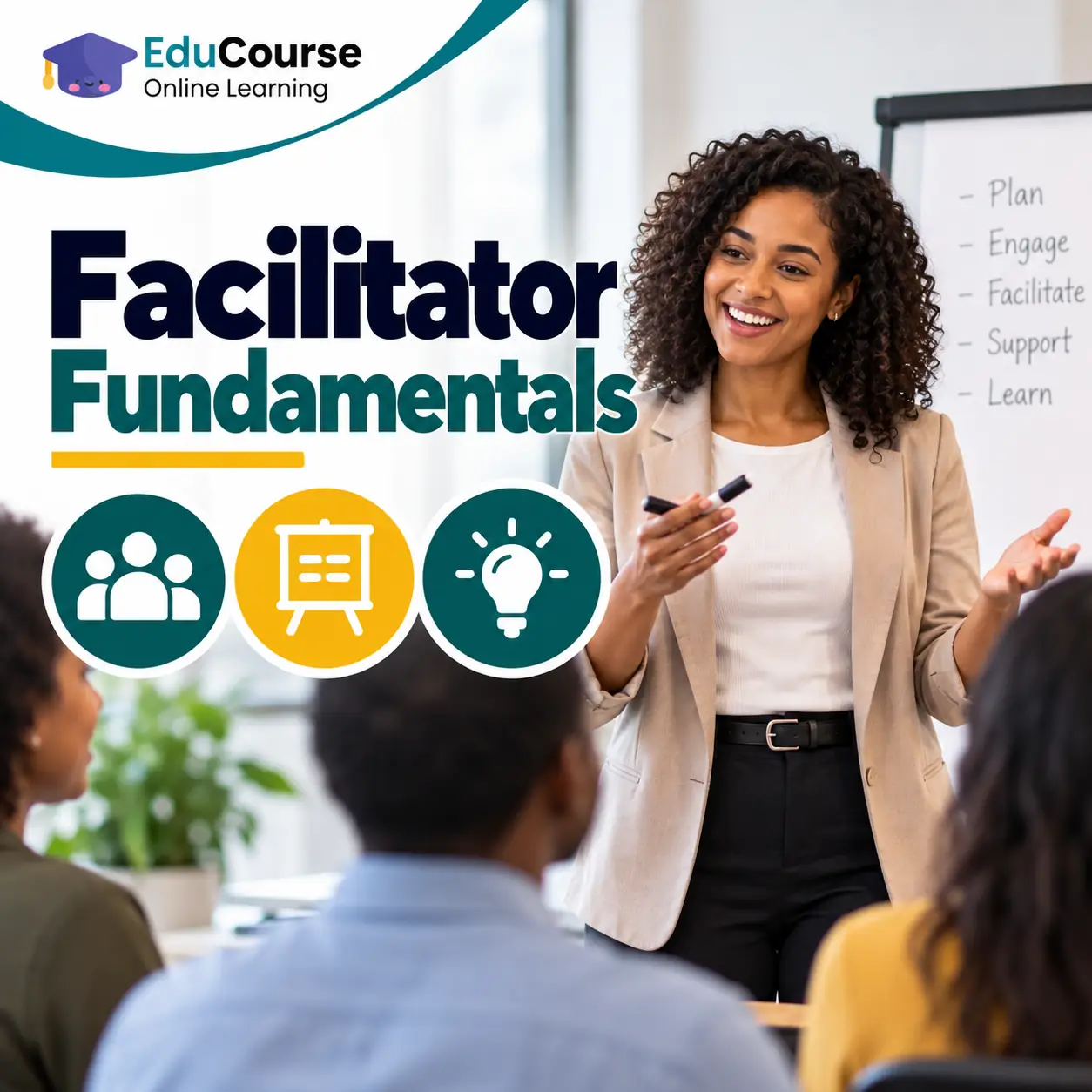
The Free Facilitator Fundamentals Course with Certificate in South Africa is an online beginner course for people who want to guide learning with greater confidence, structure and purpose. You will study facilitation roles, session planning, communication, group participation, learning activities and feedback, with a certificate available after you complete the course.
This course is designed for aspiring facilitators, workplace trainers, teachers, tutors, volunteers, team leaders and anyone who supports group learning. You will explore practical ways to prepare sessions, understand participant needs, encourage involvement and respond constructively when learning situations become challenging.
Facilitation is more than standing in front of a group and presenting information. It involves creating the conditions for people to think, contribute, practise skills and learn from one another. For beginners, these fundamentals provide a useful starting point for leading discussions and learning activities in a clear, respectful way.
Course informationFacilitators are needed wherever people meet to learn, solve problems, share ideas or develop workplace skills. A strong facilitator gives a session direction while still allowing participants to take part actively. These abilities can support learning in classrooms, community programmes, staff development sessions, workshops and informal group settings.
A facilitator course with certificate can also help you organise your knowledge and show that you have completed structured learning in basic facilitation. It does not replace experience or role-specific requirements, but it can give you practical concepts to apply as you continue developing.
South African groups can include participants with different languages, cultures, levels of confidence, educational backgrounds and access to resources. Learning how to create an inclusive environment is therefore an important part of responsible facilitation. The course considers participation, respect and adaptability rather than relying on one approach for every group.
The learning areas below take you from the basic meaning of facilitation to the delivery and review of a complete session.
Learn how facilitating differs from teaching, coaching and presenting. You will consider the facilitator’s responsibilities, limits and professional conduct in learning and workplace settings.
Explore how to identify participant needs, set outcomes and create a practical session plan with suitable timing, activities and resources.
Learn ways to build trust, respect diversity and encourage contributions from people with different experiences, communication styles and learning needs.
Practise the foundations of clear verbal and non-verbal communication, active listening, purposeful questioning and instructions that participants can follow.
Compare discussions, brainstorming, paired activities, role-play, demonstrations and problem-solving tasks. You will consider how each method supports different outcomes.
Develop an awareness of participation patterns, including dominant, quiet and disruptive behaviour. The lesson introduces respectful ways to keep a group focused and involved.
Learn how to respond to challenging questions, manage disagreement and recognise issues that should be referred or escalated beyond the facilitator’s role.
Explore how to select resources that support the session objective and adapt activities for different group sizes, settings and available materials.
Discover simple ways to check understanding during a session and collect feedback that can guide improvements to your next learning experience.
Bring the process together by opening, guiding and closing a session while managing time, responding to participants and reflecting on your performance.
For further context, the guide on facilitation, teaching, coaching or presenting can help you decide which approach best suits a particular group-learning situation.
10 lessons with topics and quizzes covered in this course.
Facilitator Fundamentals is designed for beginners who want a clear introduction to the subject, with practical lessons, guided learning, and simple explanations that are easy to follow online.
Yes, learners in South Africa can study this course online at their own pace, which makes it useful for flexible learning, personal development, and building practical knowledge from home or work.
This course covers practical learning areas such as What facilitation means in learning and workplace settings, The difference between facilitating, teaching, coaching and presenting, Core responsibilities and professional boundaries, Setting clear session aims and learning outcomes, helping learners build foundational knowledge that can be applied in study, work tasks, and everyday digital learning.
Most learners can work through the course in a few focused hours, but the online format allows you to move at your own pace and revisit lessons whenever you need extra practice.
A certificate is available after successful completion, which gives learners a simple way to show that they finished the course content and assessment requirements online.
These skills are useful because they support workplace readiness, digital confidence, and practical day-to-day tasks, which can help learners strengthen their knowledge in a South African learning and work environment.