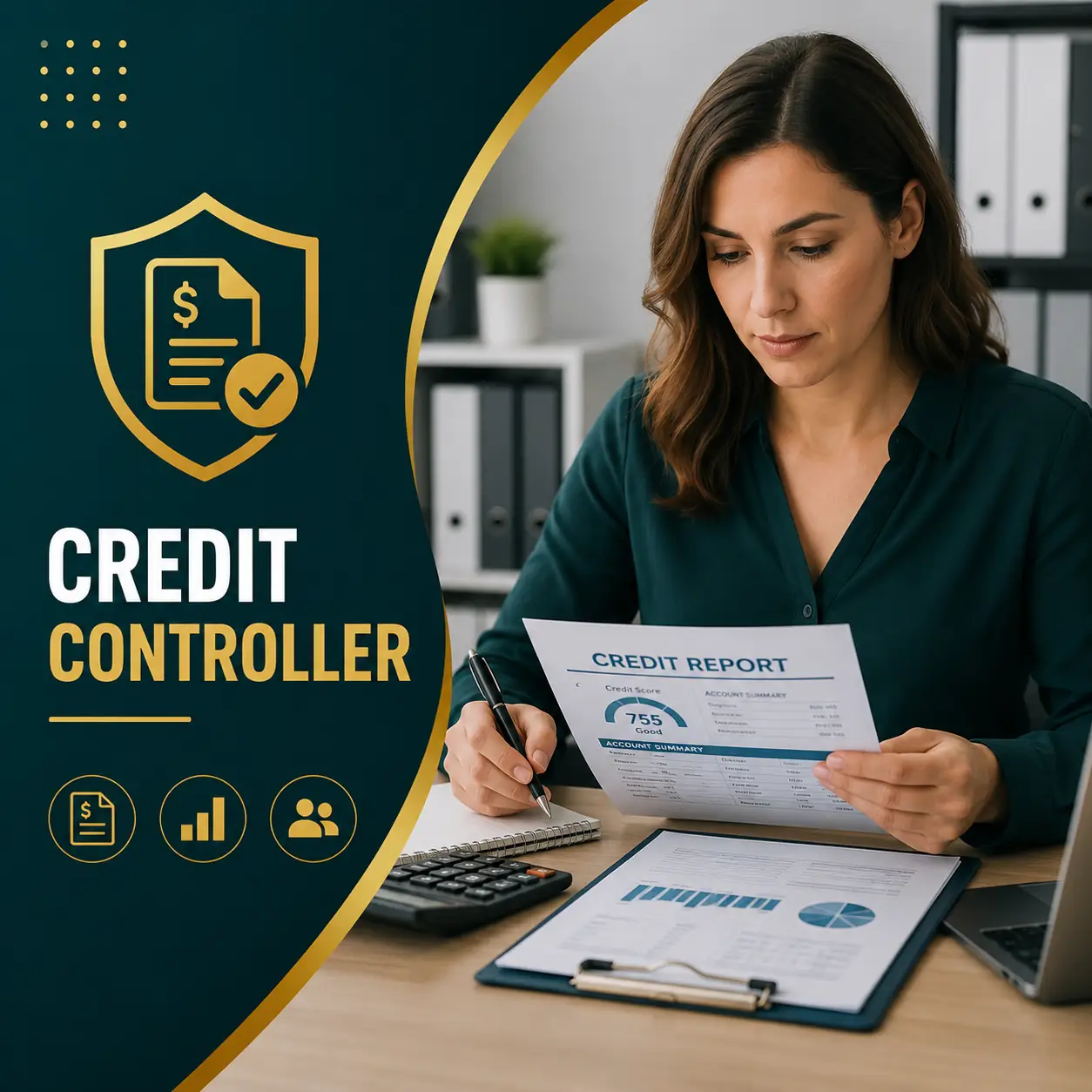
Study a Free Credit Controller Course with Certificate in South Africa with Durban City Academy. Learn role and Importance of a Credit Controller, credit Control in.
10 lessons with topics and quizzes.
Looking for a free credit controller course with certificate in South Africa? This online learning programme at Durban City Academy offers an ideal opportunity to build crucial skills in credit management, account monitoring, and risk reduction. Designed for beginners, it teaches you how to handle overdue payments professionally and maintain a healthy cash flow. Upon completing this fully online course, you'll receive a certificate to demonstrate your new expertise.
This course suits anyone who wants to start or boost a career in finance or accounting. You’ll explore topics like understanding credit risk, invoicing, debt collection procedures, and legal frameworks—all relevant for South Africa’s business environment. Whether you're fresh to credit control or seeking workplace training, these lessons guide you through essential credit controller skills.
Credit control ensures businesses manage customer payments effectively to prevent losses and improve cash flow. This beginner-friendly course introduces you to the fundamentals in a clear, accessible way, making it perfect for those looking for free credit controller training South Africa can access online anytime.
South Africa’s dynamic credit market requires professionals who understand local regulations like the National Credit Act and how to apply them in daily tasks. Online learning makes enrolment flexible, letting you study at your own pace while gaining insights into credit control best practices tailored to South African businesses.
You'll also learn about communication strategies for debt collection and how to use credit control software tools common in local companies. Throughout, practical examples and case studies help bring theory into real-world contexts, preparing you for workplace challenges.
By mastering credit management essentials here, you’re positioning yourself to add value in various industries. The demand for credit controllers who can reduce business risk and improve financial health is steady across South Africa, making this course a smart stepping stone.
Credit controllers play a key role within finance teams, helping businesses secure revenues by managing credit accounts and reducing unpaid debts. In South Africa, credit management expertise is essential for minimising bad debts and ensuring compliance with consumer protection laws.
This free credit controller course South Africa offers strengthens your understanding of practical credit control, preparing you for roles in financial departments, collections agencies, or small businesses. The user-friendly online format means you can learn from anywhere without interrupting your current job or studies.
As businesses increasingly adopt automated credit control tools, having formal training in these systems and processes enhances employability. Plus, the certificate you earn proves your commitment and knowledge to prospective employers.
Understand the credit controller’s role and importance within business finance.
Learn how to assess customer creditworthiness and manage potential risks.
Discover how to develop and apply credit policies, including setting payment conditions.
Master creating accurate invoices and managing payment records.
Explore effective strategies and communication for collecting outstanding debts.
Get familiar with software commonly used for monitoring credit accounts.
Learn to analyse debtor age reports and prepare management reports.
Review South African laws affecting credit agreements and collections.
Enhance your time management and negotiation capabilities.
Apply your skills through real-world scenarios and case studies.
10 lessons with topics and quizzes covered in this course.
Studying this course online in South Africa offers flexibility and convenience, allowing you to develop valuable workplace skills without the cost barrier. As a free credit controller course South Africa learners trust, it provides essential knowledge to help reduce bad debts and improve company cash flow.
Use the earned certificate as proof of your skills when pursuing job opportunities or promotions. The practical approach ensures you’re ready to face industry challenges and support better financial decisions within local businesses.
Whether you want to understand credit control basics or sharpen your existing skills, this training can play a critical role in career development.
Once you complete all course lessons and assessments, you will receive a certificate confirming your achievement. This certificate is accessible online to add to your CV or professional profile. It highlights your competence in credit control and can support your job applications and career growth.
Credit Controller is designed for beginners who want a clear introduction to the subject, with practical lessons, guided learning, and simple explanations that are easy to follow online.
Yes, learners in South Africa can study this course online at their own pace, which makes it useful for flexible learning, personal development, and building practical knowledge from home or work.
This course covers practical learning areas such as Role and Importance of a Credit Controller, Overview of Credit Control in South Africa, Basic Terminology in Credit Control, What is Credit Risk?, helping learners build foundational knowledge that can be applied in study, work tasks, and everyday digital learning.
Most learners can work through the course in a few focused hours, but the online format allows you to move at your own pace and revisit lessons whenever you need extra practice.
A certificate is available after successful completion, which gives learners a simple way to show that they finished the course content and assessment requirements online.
These skills are useful because they support workplace readiness, digital confidence, and practical day-to-day tasks, which can help learners strengthen their knowledge in a South African learning and work environment.